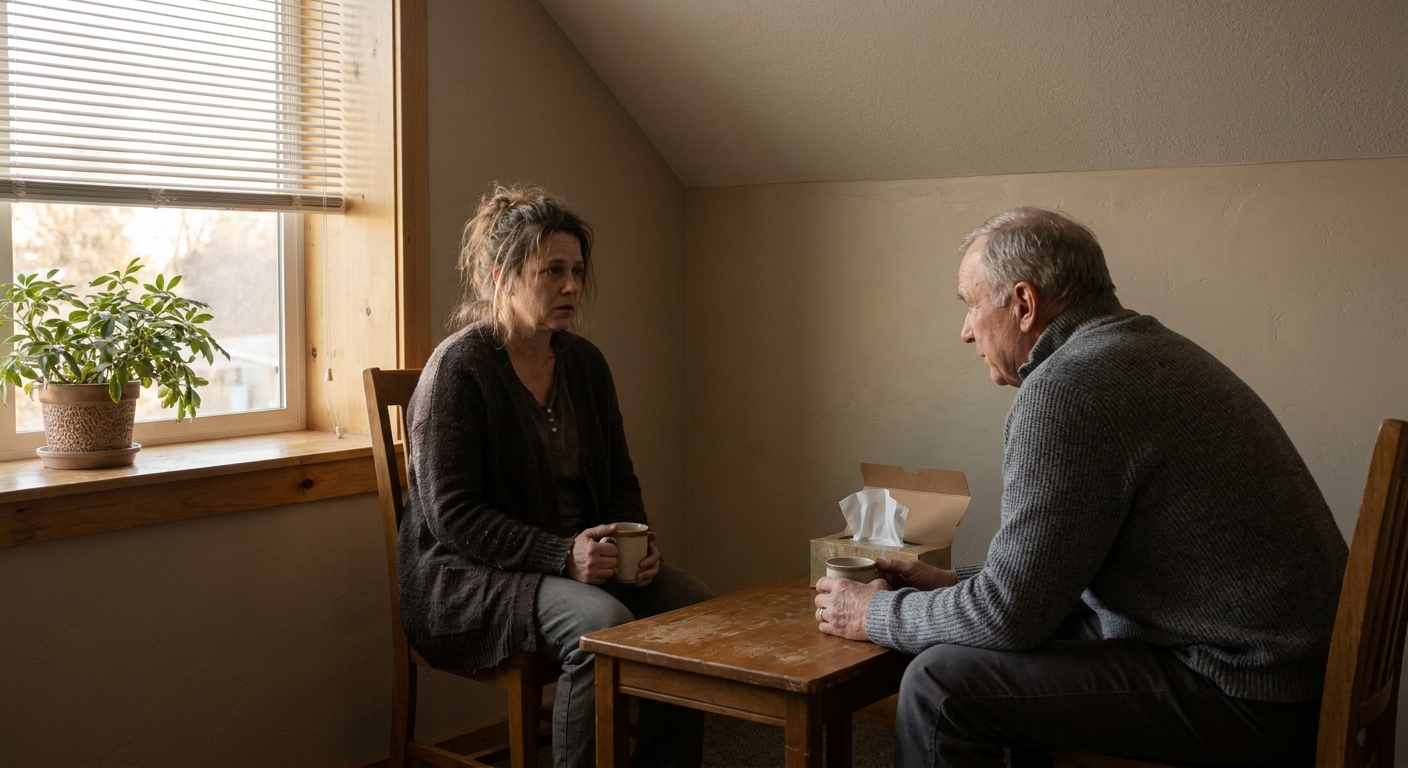

You found the 3-3-3 rule on a wellness blog or heard it from a sponsor. When the craving hit, you tried it: you named three things you could see, three things you could hear, and moved three parts of your body. It worked for about ninety seconds, and then the pull came back stronger. So now you are typing “What is the 3-3-3 rule for addiction?” into your phone and wondering, like many Beecon Recovery clients once did, if you did it wrong, or if something is wrong with you.
Maybe you are not even asking for yourself. Maybe you are a mom or dad sitting up late, reading this for a grown son or daughter who keeps trying and keeps sliding back. Either way, hear this first: nobody did it wrong, and nothing is wrong with the person you are worried about. The tool is real. It was never built to carry the weight you put on it.
At Beecon Recovery in Brigham City, many people who walk through our door tried something like this first. Some used a breathing trick, an app, a card in a wallet, or plain white knuckles. Many came to us at Beecon Recovery after cycling through relapse, jail, or programs that wrote them off. When the technique doesn’t hold, they blame themselves, and their families blame themselves too.
This article explains what the 3-3-3 rule actually does and why a craving is different from a panic attack. It also covers how to tell when it may be time to look for substance abuse treatment instead of one more technique. Finally, it explains how Utah Medicaid, Blue Cross Blue Shield, and Cigna may help cover that care.
What Is The 3-3-3 Rule For Addiction, And What Was It Never Built To Treat?
The 3-3-3 rule is a grounding exercise. You name three things you see, name three sounds you hear, and move three parts of your body. Counselors commonly teach it for anxiety and panic, and it was never designed to treat substance use disorder.
Here is how it works when it works. During a panic attack, your mind races ahead to the worst thing that could happen, your heart pounds, and your breathing gets shallow. Grounding gives your attention a simple job in the present moment, like spotting the lamp, the clock, and the window. That slows the spiral down. For a wave of anxiety, that may be enough to get you through.
People started borrowing the rule for cravings because a craving can feel a lot like panic. It is loud and urgent, and it lives in your body. Sponsors, friends, and websites pass it along with good intentions. The trouble is that a craving is not only a feeling. It is a signal coming from a condition.
SAMHSA explains why addiction is understood as a disease and not a lack of willpower. A grounding exercise may interrupt a moment, but it cannot change the condition that keeps producing those moments.
Think of it like holding a cold cloth to your forehead during a fever. You feel better for a minute, and that matters, but the infection is still there. So if the 3-3-3 rule helps you, keep it. Just don’t let it be the whole plan.
At Beecon Recovery, grounding is one small skill inside a larger relapse prevention plan. We’ve written about how skills like guided imagery can fit inside a treatment plan in the same way. The skill helps most when something sturdier sits underneath it.
Why Does Ninety Seconds Of Calm Lose To A Brain That Addiction Has Rewired?
Repeated substance use changes how the brain handles reward, stress, and self-control, and a short distraction does not undo those changes. The craving comes back because the wiring underneath it is still there.
The National Institute on Drug Abuse describes this plainly in Drugs, Brains, and Behavior. Drugs and alcohol act on the brain’s reward circuit. Over time the brain adjusts, so everyday things like food, friends, or a good night’s sleep may feel flatter than they used to.
A person may need more of the substance to feel the same effect, which is called tolerance. Use also affects the parts of the brain that handle judgment, decisions, and self-control.
Now look at what grounding asks you to do. It asks the thinking, planning part of your brain to take the wheel. That is the very part addiction has been wearing down.
Picture a few common moments. You drive past the gas station where you used to buy. Payday hits. You get into a fight with someone you love. Your brain fires the craving in a split second. You name three things you see, and it quiets for a minute.
But the same cue is still in your life tomorrow and the next day, and the reward circuit has not changed at all. Ninety seconds of calm is up against months or years of rewiring. That is not a fair fight, and losing it says nothing about anyone’s character.
That is one reason Beecon Recovery offers neurofeedback. In neurofeedback, sensors read your brain activity and show it to you in real time. Over a series of sessions, you practice shifting toward calmer patterns while you watch it happen. The goal is to help support a different stress response instead of only distracting yourself from it.
Neurofeedback is always paired with therapy at Beecon Recovery. Still, it works on the brain itself, which a grounding exercise was never meant to do.
What If The Anxiety You Are Grounding Is The Thing Driving Your Use?
Then the anxiety may need treatment of its own, at the same time as the substance use. Beecon Recovery treats dual diagnosis and co-occurring mental health conditions. A coping skill may quiet a symptom for a minute without touching the condition underneath it.
A lot of people never set out to have a drinking or drug problem. They set out to sleep, to stop the worry that runs all day, or to quiet memories they never got help for. Alcohol or pills worked, at first. Over time the substance became the main way they handled anxiety, depression, or trauma, and now there are two problems tangled together.
That is exactly why someone might try the 3-3-3 rule and still relapse. Since the rule was built for anxiety, it may truly help with the panic. Say you ground yourself through a hard moment at three in the afternoon and feel better. By nine that night, the craving shows up anyway. The addiction has its own momentum, and the anxiety underneath was never treated. You used one tool on two problems, and one of them was never the tool’s job.
When only one condition gets treated, the other one may pull a person back. Treat the drinking and leave the depression alone, and the depression keeps handing out reasons to drink. Treat the anxiety and ignore the substance use, and the substance keeps making the anxiety worse. That kind of care sets people up to fail.
Beecon Recovery offers both mental health treatment and substance use disorder treatment. The plan for the anxiety and the plan for recovery come from the same team and work toward the same goal.
Why Do You Keep Ending Up Back At Day One When The Techniques Run Out?
Self-help tools without structure leave a person alone at the exact moment they are most at risk. The cycle usually goes like this: try a technique, watch it fade, use, feel the shame hit, and try again harder, still alone.
The shame is what keeps the wheel turning. After a relapse, you tell yourself you should have been stronger. That shame feels awful, and for many people feeling awful is itself a trigger to use. So you find a new technique, or go back to the old one with more grit. Then the cycle starts over, and each round chips away a little more hope.
Here is something that may take some weight off your shoulders. The National Institute on Drug Abuse reports that relapse rates for substance use disorders are between 40 and 60 percent. That is similar to other long-term illnesses like high blood pressure and asthma.
NIDA explains that relapse means treatment needs to be adjusted or restarted, not that a person has failed. You are not broken, and neither is your child. You have been trying to manage a chronic condition with a tool meant for a passing moment.
Beecon Recovery offers intensive outpatient (IOP) and outpatient (OP) programs built for people who have relapsed before. That includes people who have cycled through incarceration and people other programs overlooked. Beecon Recovery clients keep living at home while they attend structured clinical hours each week. That way they practice recovery in their real lives instead of in a bubble.
Together with a counselor, each client builds a relapse prevention plan that maps triggers, early warning signs, and who to reach out to when things get shaky. The support doesn’t stop when the program does. Beecon Recovery follows up with every client for 12 months after treatment to track their recovery. We want to know how each person is really doing in that first year instead of guessing. That ongoing connection is what breaks the cycle.
What Does Treatment For Addiction Actually Include?
Treatment for addiction often combines several pieces:
- Evidence-based therapy
- Medical support when someone needs it
- Care for any mental health condition
- A written relapse prevention plan
- Follow-up that lasts well past the program
Grounding can fit inside that plan as one skill among many.
NIDA’s overview of treatment and recovery says good treatment looks at the whole person, not only the drug use. Mental health, physical health, relationships, legal situations, and work all belong in the plan. A breathing exercise touches none of those, while a real treatment plan touches all of them. NIDA also notes that staying in treatment long enough matters, which is why structure and follow-up count for so much.
At Beecon Recovery, that whole-person approach shows up in concrete services:
- One team for both conditions: clients receive substance use disorder treatment and mental health treatment from the same people.
- Relapse prevention work: clients leave with a plan they can use when a hard day comes.
- Neurofeedback: works on supporting a different stress response.
- Nutrition counseling: helps rebuild a body that substance use has worn down, because poor sleep and poor eating may make cravings harder to fight.
- Support after incarceration: specific help for people coming home from jail or prison.
This is what it means to support people in recovery, not just treat symptoms.
When you compare options, ask every program what they track and who follows up after a client leaves. The American Society of Addiction Medicine has urged stronger protections against unethical addiction treatment practices. Asking hard questions is not rude. It is smart.
What Types Of Programs Does Beecon Recovery Offer?
Beecon Recovery is an outpatient program in Brigham City, serving clients from Roy, Logan, Ogden, and Layton too. Clients live at home and come in for treatment, so recovery happens inside real life. Here is what the program includes:
- Intensive Outpatient Program (IOP): several structured clinical sessions each week for people who need strong support while living at home.
- Outpatient (OP) and aftercare: fewer weekly hours for people stepping down from IOP or who need steady, ongoing support.
- Substance use disorder and addiction treatment: evidence-based therapy focused on the reasons a person uses.
- Dual diagnosis care: treatment for co-occurring mental health conditions like anxiety, depression, and trauma alongside the substance use.
- Relapse prevention: a written plan for triggers, warning signs, and who to call.
- Neurofeedback and nutrition counseling: added support for the brain and body.
- Support for people impacted by incarceration: help rebuilding life after jail or prison.
- 12-month follow-up: check-ins with every client for a full year after treatment.
Some people need more medical care than an outpatient program can safely provide, such as supervised withdrawal. If that is the case, the Beecon Recovery team will say so plainly and help connect them to the right medical care.
If You Are Reading This For Your Son Or Daughter
Maybe your child has been to treatment before. Maybe they left early, or came home and it all fell apart within a month. Now you are scared to hope again because hoping has hurt so many times. That fear makes sense. You have been carrying this for a long time, and you are tired in a way most people will never understand.
You may be worried they will refuse to go, or walk out the way they did last time. That happens, and it is not the end of the story. Because Beecon Recovery is outpatient, your child doesn’t have to leave home, their job, or their life to start. For a lot of adult children, that makes saying yes a little easier.
You may be wondering how this place is any different from the ones that didn’t work. Ask us what happens after treatment ends. We at Beecon Recovery keep following up with every client for 12 months, because that first year is where recovery is won or lost.
You may also be wondering whether you can afford it at all. That is the question we at Beecon Recovery answer first on most calls, and we cover it below.
What every parent wants is simple. You want your child to find recovery, maintain recovery, and become the person you always knew they could be. You want that without having to manage every single day of their life. We want that day for your family, the day you can look around the dinner table and say, “She has her life back.”
How Much Does Substance Abuse Treatment Cost In Utah, And How Can You Pay?
The cost of substance abuse treatment in Utah depends on three things: the level of care, how many weeks a person attends, and most of all what their insurance covers. For many families, insurance pays for a large share of outpatient treatment. The out-of-pocket cost is often much lower than people fear. The best way to get a real number is to have the program check your specific benefits before treatment starts.
There are several ways families pay for care:
- Utah Medicaid: Utah expanded Medicaid, so many adults who could not qualify before now have coverage for substance use and mental health treatment.
- Marketplace plans: Under federal law, most health plans sold on the Marketplace must cover substance use disorder services as an essential health benefit. Mental health parity rules generally keep plans from limiting addiction care more strictly than medical care.
- Employer plans: Many also cover outpatient treatment.
If your child is over 18, the insurance may be in their name or still on your family plan. Either way, the Beecon Recovery intake team can work with it. If you have no insurance, ask the team directly about your options, because cost should never be the reason someone stays stuck.
Beecon Recovery accepts these insurance providers:
- Utah Medicaid
- Blue Cross Blue Shield
- Cigna
The team checks your benefits before you start, so cost is never a surprise.
How Do You Know A Grounding Technique May Not Be Enough This Time?
It may be time for professional care if a person shows any of these patterns:
- They have relapsed more than once.
- They feel sick or shaky when they stop.
- They keep using despite real consequences.
- They live with anxiety, depression, or trauma alongside their use.
Those are signs of a medical and behavioral condition, not a willpower problem.
Watch for these signs in your own life or your loved one’s life:
- They have quit before and gone back, more than once.
- They get shaky, sweaty, sick, or unable to sleep when they cut back or stop.
- They need more than they used to for the same effect.
- They keep using even after it has cost them a job, a relationship, their health, or their freedom.
- They use to manage panic, low mood, or memories they can’t shut off.
Withdrawal symptoms deserve special attention. Stopping some substances suddenly can be dangerous and even life-threatening, especially alcohol or certain sedatives like benzodiazepines. Please don’t quit those cold turkey without talking to a doctor first.
If you or someone with you is in danger right now, call 911 or go to the nearest emergency room. Your safety comes before everything else in this article.
When you reach out, the Beecon Recovery intake team in Brigham City starts by looking at medical safety. Then they talk with you about whether IOP or outpatient care fits where things are right now. If someone needs more medical care than an outpatient program can safely give, they will tell you straight and help you find it.
People come to us at Beecon Recovery from Brigham City, Roy, Logan, Ogden, and Layton for care close to home. Most of them are not looking for one more trick. They want a new life, and the first step is the day they choose themselves.
What Addiction Treatment Options Are Available In Or Near Brigham City, Utah?
Knowing what kinds of help exist makes the next step feel less overwhelming. Here are the main options for addiction treatment in and around Brigham City, UT:
- Beecon Recovery, Brigham City: IOP and outpatient treatment for substance use disorder, dual diagnosis, and co-occurring mental health conditions, with 12-month follow-up. Serves Brigham City, Roy, Logan, Ogden, and Layton. Accepts Utah Medicaid, Blue Cross Blue Shield, and Cigna.
- Medical detox through a hospital or detox provider: for anyone at risk of dangerous withdrawal before starting outpatient care.
- The public behavioral health authority serving Brigham City: county-funded mental health and substance use services, often a good fit for people on Medicaid or without insurance.
- Your primary care doctor in Brigham City: for a health check, withdrawal safety, and referrals.
- Peer support meetings in Brigham City: 12-step and faith-based recovery groups that work best alongside professional treatment.
- FindTreatment.gov: SAMHSA’s free, confidential search tool for licensed programs near your ZIP code.
What Are Three Good Places To Look For Help With Substance Abuse?
Three good places to start are a doctor you trust, the free SAMHSA National Helpline at 1-800-662-4357, and a licensed local treatment program like Beecon Recovery in Brigham City. Each one can point you toward safe next steps, and none of them require you to have it all figured out first.
1. A doctor. A primary care provider can check for medical risks, including withdrawal, and refer you to the right level of care. If your loved one won’t go, you can still talk to your own doctor about what you are seeing.
2. The SAMHSA National Helpline. The SAMHSA National Helpline is free, confidential, and open 24 hours a day, 365 days a year. Call 1-800-662-4357 for treatment referrals and information. If someone is in a mental health crisis, call or text 988.
3. A local treatment program. A program in your own community can do an assessment, check insurance, and start care quickly. At Beecon Recovery, a parent or spouse can make the first call. We will walk you through how to bring your loved one in.
What Else Do People Ask Before They Call Beecon Recovery?
A handful of questions come up on almost every first call, so here are honest answers to the ones that matter most.
What is the 3-3-3 rule for addiction? The 3-3-3 rule is a grounding exercise for anxiety. You name three things you see, name three things you hear, and move three parts of your body. People sometimes borrow it for cravings, but it was never designed to treat addiction.
Can grounding techniques help with drug or alcohol cravings? Grounding may give a short break from a craving. It will not change the brain changes, mental health conditions, or habits that drive addiction. Those need structured treatment.
What approaches may be helpful in treating substance use disorder? A strong approach may combine therapy, medical support when it’s needed, care for co-occurring mental health conditions, relapse prevention planning, and long-term follow-up. NIDA describes good treatment as care that addresses the whole person.
Does Beecon Recovery accept insurance for addiction treatment in Brigham City? Yes. Beecon Recovery accepts Utah Medicaid, Blue Cross Blue Shield, and Cigna. The intake team checks your benefits and explains what to expect before treatment begins.
Can I call for my adult child? Yes. Many of our first calls at Beecon Recovery come from a mom or dad. We can answer your questions, check insurance, and talk about how to approach your child.
When should someone seek professional treatment instead of trying self-help techniques? Seek professional treatment when relapse keeps happening, withdrawal symptoms show up, use continues despite consequences, or anxiety, depression, or trauma are part of the picture. At that point, clinical care may be the safer and stronger choice.
Call Beecon Recovery in Brigham City today. When you call:
- Ask how soon an assessment can happen.
- Have the insurance card ready so the team can check benefits.
- Ask for a treatment plan that goes after the reasons for using, not just the moment of craving.
Before you dial, do one thing. Write down the last three times grounding didn’t hold. Include what time it was, where you or your loved one were, and what happened right before. That short list is the start of a relapse prevention plan, and it gives the intake team a real picture on day one.
Beecon Recovery exists to serve the overlooked, and that includes you and the person you love.
When Grounding Alone Isn’t Enough
If you’ve tried the 3-3-3 rule and still feel overwhelmed by cravings or anxiety, that’s not a failure on your part. Recovery often requires more than techniques you practice alone. The team at Beecon Recovery in Brigham City understands what you’re facing and can help you build a fuller support system around the moments when grounding falls short.
Individual results vary. This article is for education and is not medical advice. If you are having a medical emergency, call 911 or go to the nearest emergency room.